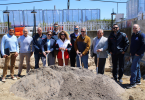
Brighton, MA – Construction and restoration has begun on affordable housing units at the historic Warren Hall building in Brighton.
The construction follows the closing of financing, a collaborative effort between Allston Brighton Community Development Corporation (ABCDC), Schochet, Mayor’s Office of Housing at the City of Boston (MOH), Community Economic Development Assistance Corporation (CEDAC), MassHousing, and the Executive Office of Housing and Livable Communities (EOHLC), with private sector equity provided by R4 Capital and Dorfman Capital.
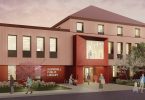
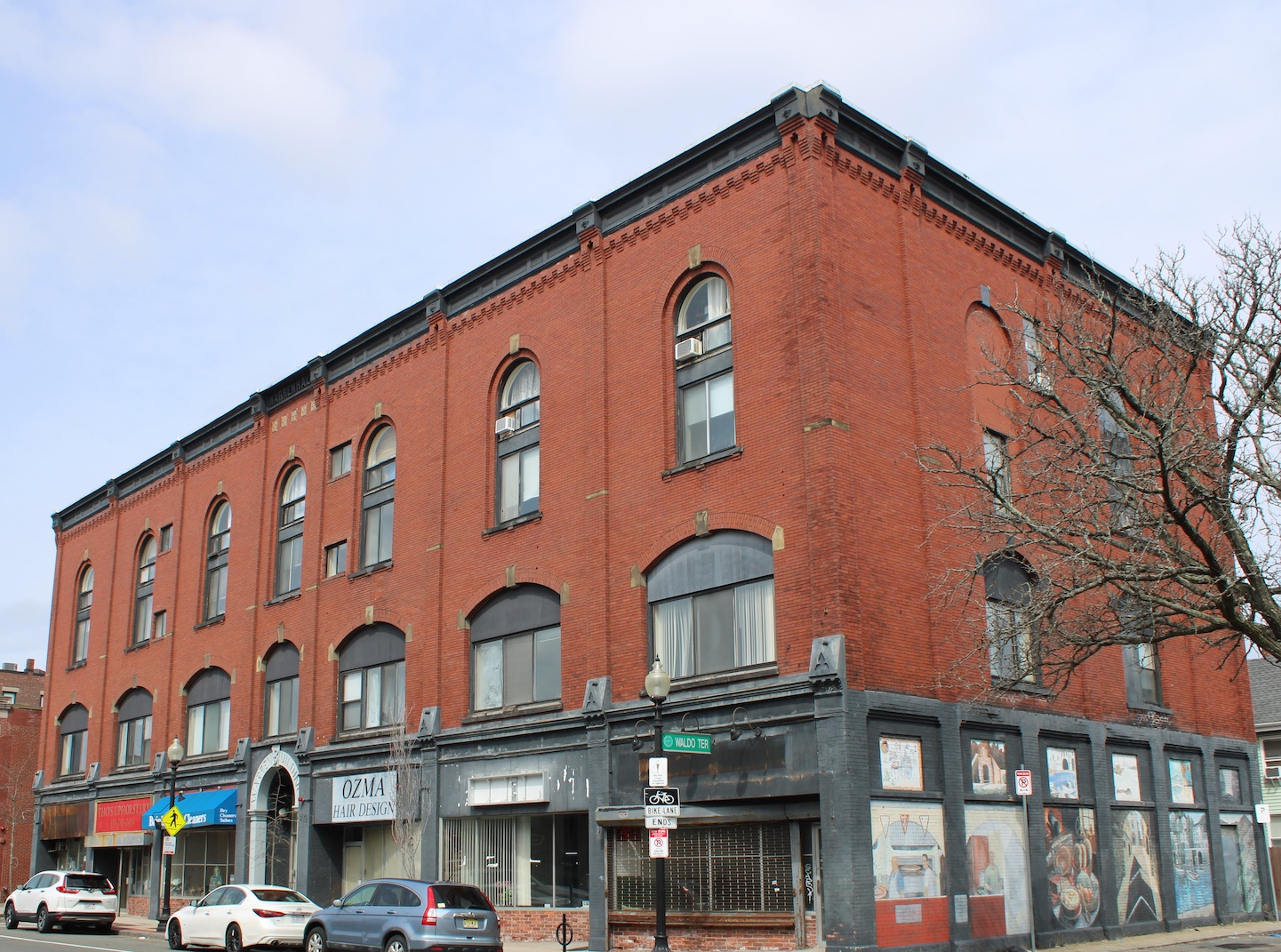
Warren Hall, located at 329-337 Washington Street, was built in 1879 and is a historically significant structure in Brighton Center with 33 apartments on the upper floors to be converted to 35 units and six first floor commercial bays to be converted to three commercial spaces and two residential ADA compliant apartments. According to the Brighton Allston Historical Society, the space was used for multiple different functions, including political rallies and weddings, and briefly as a rock club where The Doors performed in 1967. The building was converted into housing in the 1970s.
The 4-story masonry building was originally financed through a HUD-insured Section 236 mortgage and subject to regulated rents pursuant to Section 236. Following the expiration of the program’s mortgage after the initial 40-year period, affordability was not extended by building ownership, and, over the years, the private owner delayed repairs, leaving the building in disrepair. Tenant organizers urged housing developers and local organizations to intervene to protect the health and safety of the residents. Through a collaboration between ABCDC, Schochet, MOH, and CEDAC, the building was purchased in 2024 with the goal of repairing the site and reintroducing affordability.
The scope of work at Warren Hall, which totals more than $10 million, includes selective demolition, full interior rehabilitation, and exterior site upgrades. It will include improved envelope performance via wall cavity insulation, roof insulation, and new windows; electrification of all utilities; addition of ERVs to provide fresh air to each unit and common areas; in-unit improvements to provide new kitchen cabinets, countertops, side-splashes, hardware, prepared sink openings, appliances, and bathroom vanities; and exterior historic preservation, including exterior masonry cleaning and repairs.
Residents and businesses currently operating on the property will be relocated for 8-12 weeks during the construction process into onsite vacant units. The development team is working with HousingToHome (HTC) to provide resident relocation services. Construction is expected to last approximately 16 months.