by Adam Fearing and Chris Fee
In today’s fast-paced world, opportunities for meaningful interactions spanning generations are increasingly rare. Gardens, however, offer something simple yet powerful: a place to slow down, connect, and learn together. When designed with intention, they become more than green spaces; they become hubs for discovery, biodiversity, and community.
J.J. Carroll House in Brighton, Massachusetts is perhaps the best representation of this approach. The landscape, designed by Stantec’s Boston office was the recent winner of Built Environment Plus’ 2025 Green Building Showcase Award in the Site & Landscape category. The project transformed an aging public housing development for seniors owned by BPDA, into a new affordable senior housing building, now owned by 2Life Communities. The landscape that accompanies the building, designed by MASS Design, is a green oasis that supports both ecological health and social connection for its residents and the greater community.
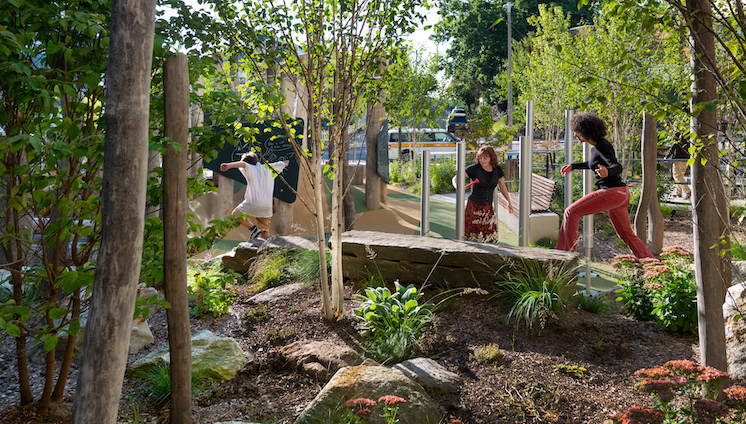
Naturalized plantings blanket the site, offering users numerous spots to explore and experience the beauty of nature through the seasons. Also, musical pieces placed throughout the garden, provide a diverse experience and offer alternatives for more creative and performance-based activities. / Photos courtesy of Stantec
At the heart of the design is an intergenerational play garden, the first of its kind in Brighton. This space encourages seniors and younger generations to interact through art, music, storytelling, nature play, and quiet meditation. Two landscaped terraces provide areas for exploration and shared experiences: grandparents and grandchildren playing together, neighbors meeting outdoors, and families rediscovering the joy of nature. These spaces are designed not only for passive enjoyment but for active engagement, creating opportunities for curiosity and conversation across age groups.
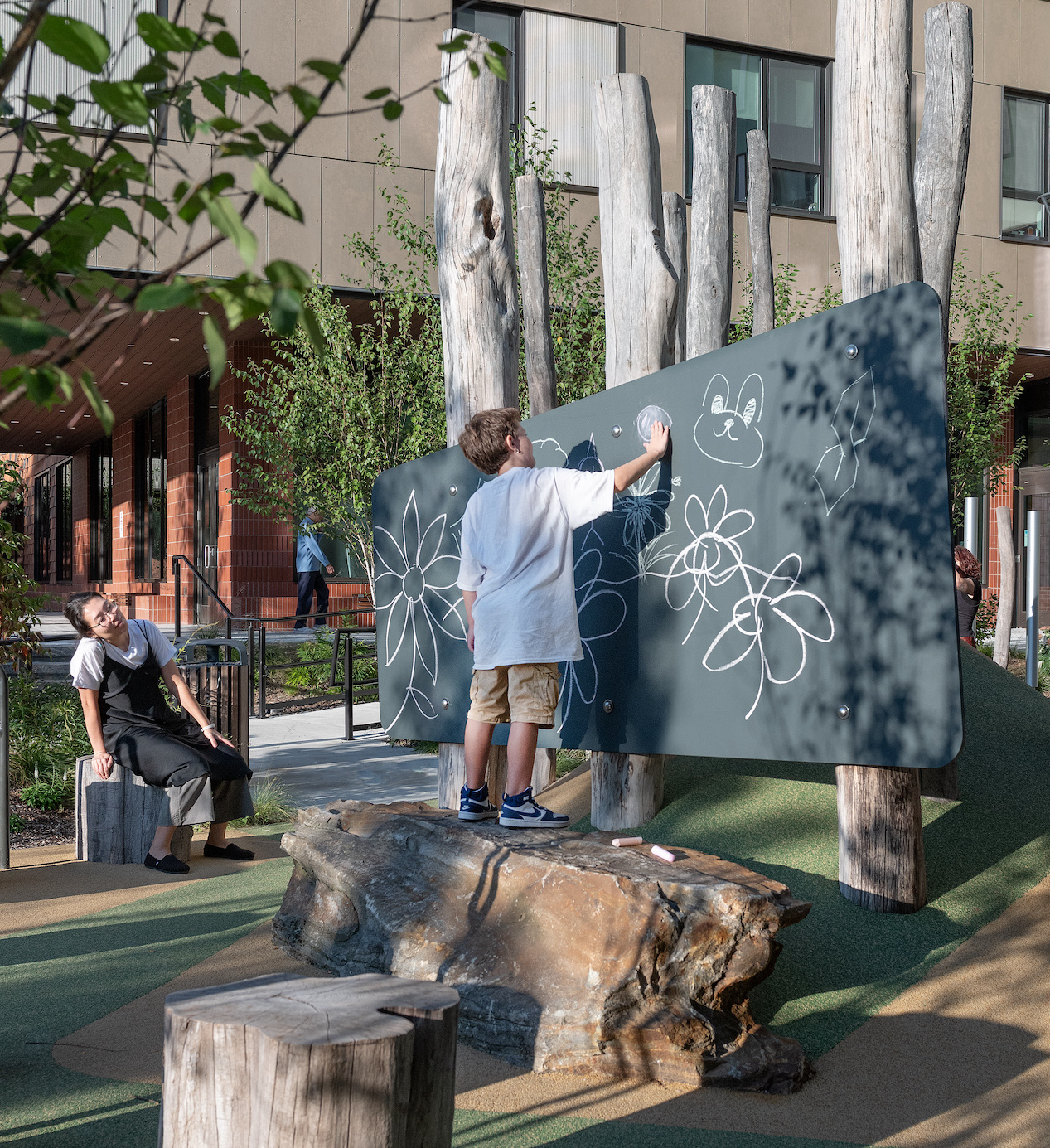
Custom chalk panels mounted within the “robinia log forest” inspire users to create art and explore their creativity by making a “backdrop” for their story hour.
Adding to this sense of community is a rooftop garden with accessible raised beds, giving residents the chance to grow their own plants. Hands-on gardening offers physical activity, mental stimulation, and a sense of purpose, while fostering social ties among neighbors. For many, tending a garden becomes a shared ritual; a simple act which sparks conversion and strengthens community bonds.
Residents also expressed a desire for “a simple walk outside,” and the design delivers with walking loops that vary in grade and experience, complete with places to pause and rest amongst the lush plantings. Native stone and repurposed wood logs serve as steppers and whimsical sculptural elements, inviting exploration and reinforcing a connection to local ecology. These details make a walk more than exercise; they create moments of curiosity and reflection.
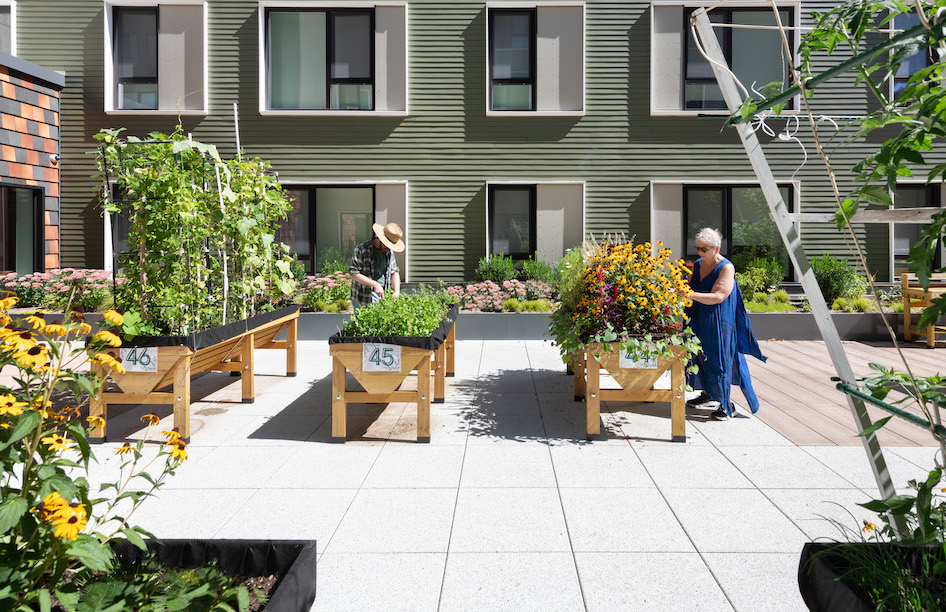
A community garden with accessible raised beds fosters connection and creativity in a DIY setting.
Sustainability is woven into every aspect of the landscape. The planting strategy includes more than 2,600 new native perennial plantings and 130 shade trees, all selected for their ability to thrive with minimal water while supporting pollinators and wildlife. Birdhouses and pollinator-friendly flowering plants provide habitats for birds and insects, restoring balance between people and humans. Permeable paving helps recharge groundwater and sustain tree health, while soil restoration techniques improve long-term resilience. These design choices turn the garden into a regenerative system where every element — from stormwater management to biodiversity — work together to serve the earth and the residents that call this place home.
The J.J. Carroll House landscape is more than a garden; it is a model for how landscape architecture can bring generations together while supporting the environment. In a time of climate challenges and social isolation among senior populations, spaces like these remind us that sustainability in design is not only about protecting the planet; it’s about creating places for connection, learning and joy. This project inspires us to create comfort and purpose within the landscapes of public housing projects. Projects like this offer a hopeful blueprint: one where native plants, pollinator habitats, and thoughtful design create spaces that nourish both people and the planet. When we grow together across generations, we all thrive.
Adam Fearing is a design manager at Stantec Planning and Landscape Architecture, and Chris Fee is a principal and landscape architect at Stantec.