
• X
  • Facebook
  • Instagram
  • Linkedin
  • YouTube
  • RSS
  • Sign In
  • My Account
High-Profile MonthlyThe Source for AEC Industry News
  • All News
      • Up Front
      • Groundbreaking
      • Topping Off
      • Ribbon Cutting
      • View All Up Front Stories
      • Residence Inn by Marriott Groundbreaking CeremonyKBE Breaks Ground on Residence Inn by Marriott at Steelpointe Harbor
      • Special Features
      • Contributor
      • Green
      • J.E.D.I.
      • Mechanical / Electrical / Plumbing (MEP)
      • Vision
      • Women In Construction
      • Regions
      • Connecticut
      • Northern New England
      • Popular Sectors
      • Cannabis
      • Corporate
      • Education
      • Healthcare
      • Interiors
      • Landscape/Civil
      • Life Science
      • Multi Residential
      • Restoration/Renovation
      • Retail/Hospitality
      • Senior/Assisted Living
      • Technology & Innovation
      • Other News
      • Awards
      • Community
      • COVID-19
      • Mixed-use
      • Municipal
      • National/International
      • Organizations and Events
      • People
      • Philanthropy
      • Products and Services
      • Real Estate
      • Training and Recruitment
  • Subscribe
  • Next Issue
  • Archive
  • Advertise
  • Video/Podcast
    • Over Lunch video series
    • Build Better Podcast
  • Industry Events
    • Calendar
    • A/E/C Associations
High-Profile Monthly
  • All News
      • Up Front
      • Groundbreaking
      • Topping Off
      • Ribbon Cutting
      • View All Up Front Stories
      • Residence Inn by Marriott Groundbreaking CeremonyKBE Breaks Ground on Residence Inn by Marriott at Steelpointe Harbor
      • Special Features
      • Contributor
      • Green
      • J.E.D.I.
      • Mechanical / Electrical / Plumbing (MEP)
      • Vision
      • Women In Construction
      • Regions
      • Connecticut
      • Northern New England
      • Popular Sectors
      • Cannabis
      • Corporate
      • Education
      • Healthcare
      • Interiors
      • Landscape/Civil
      • Life Science
      • Multi Residential
      • Restoration/Renovation
      • Retail/Hospitality
      • Senior/Assisted Living
      • Technology & Innovation
      • Other News
      • Awards
      • Community
      • COVID-19
      • Mixed-use
      • Municipal
      • National/International
      • Organizations and Events
      • People
      • Philanthropy
      • Products and Services
      • Real Estate
      • Training and Recruitment
  • Subscribe
  • Next Issue
  • Archive
  • Advertise
  • Video/Podcast
    • Over Lunch video series
    • Build Better Podcast
  • Industry Events
    • Calendar
    • A/E/C Associations
Contributor • Life Science

Lab Design: The Equipment Factor

June 23, 2023

by Jess Hamilton

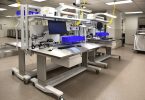
One thing that all laboratories have in common is that the scientific functions within them are equipment driven. Equipment can range in size from small, tabletop vortexers, microfuges, scales, or even handheld pipetters to space-intensive items such as freezers, anaerobic chambers, fume or biosafety hoods, automation robotics, or custom equipment.

Whether the client is an established life sciences company or a modest start-up that has outgrown incubator space, the most critical element in planning a lab fit-out is an accurate equipment list. It is the central design tool for the project and is integral to the process of laying out a lab.

Before design begins, an architect and/or lab planner works with their client to define their space program that includes a room list with functional requirements, key adjacencies, headcount, and square footage. Once the basics are established, the next step is to identify what will go into those spaces. For a lab, it is crucial to define early and completely the major furnishing and equipment components, along with workflow preferences.

Typically, the client will provide the architect and/or lab planner with an itemized equipment list that includes the make, model, dimensions, clearances, weight, and intended location, as well as all associated electrical, plumbing, and gas requirements per manufacturer specifications. If this is not possible, or if the existing equipment list is insufficient for planning and design purposes, the architect and/or lab planner may need to survey the existing equipment or develop this list with input from the client based on future projections.

This information is then entered into an equipment matrix, an essential tool for tracking equipment through design, calculating the mechanical and electrical loads, and coordinating locations for outlets, exhaust, or plumbed utilities. Laboratory equipment requires many different utilities that must be coordinated with either base building or lab-specific systems, and sometimes even with other lab equipment. When the utilities are installed in the correct locations on day one, the client can begin operations on time and avoid costly delays.

A complete equipment matrix typically contains additional details that are especially useful to the design team. Examples include identifying requirements for associated computers, UPS or backup power, and specialty casework or storage. This is beneficial to the design process as it identifies any items that require coordination or special consideration.

For a start-up client advancing from an incubator environment to leasing their first new space, the equipment list is an informational linchpin. The design team will work with the end users or procurement team to help develop and maintain their equipment list throughout design and up until move-in day. The team will work with the client to populate the list with projected items through projected growth and workflows for equipment that may be purchased in the future. If needed, a specialized consultant may be brought on to help procure lab equipment.

A detailed equipment list provides the architect and engineering team with key information related to structural, mechanical, electrical, and plumbing design that supports equipment function and performance. Close communication and coordination between all design disciplines on the team is essential for the systems to perform in harmony in support of the equipment. The design team’s job is complete when the equipment is moved into the laboratory and connected – ready for the scientists to get to work.

Jess Hamilton

Jess Hamilton is a project manager with Margulies Perruzzi.

HPNews July'23 lifesciences
    FacebookXLinkedInEmail

You may also like

Life Science

Healey-Driscoll Administration...

June 5, 2026
Contributor • Healthcare

Designing for Healing: A...

May 28, 2026
Contributor • Healthcare

Building Around Care: Lessons From...

May 28, 2026
Contributor • Healthcare

Renovating Critical Healthcare...

May 27, 2026
Contributor • Healthcare

Ask The Electrician: Is Human...

May 26, 2026
Contributor • Healthcare

The Growing Infrastructure Demands...

May 22, 2026
Contributor • Healthcare

LPRI Completes Mixed-Use Parking...

May 21, 2026
Contributor • Healthcare

New Sierra Leone Construction a...

May 21, 2026

View the June 2026 issue!

Read the 2026 MEP Supplement!

Read our annual supplements!

  • MEP2026.png
  • WIC2026.png
  • Green2025-2.png
  • HP25-Jan2023.png

HIGH-PROFILE MONTHLY
615 School St.
Pembroke, MA  02359
Phone: 781 294 4530
Fax:  781 293 5821
info@high-profile.com

Quick Links

  • About Us
  • Contact Us
  • Subscribe
  • Advertise
  • My Account

Stay Informed

Sign up for Fast Facts Friday, our weekly e-newsletter, and stay up-to-date with the latest industry news!

Sign up
Subscribe to High-Profile Monthly to receive an email notice of each new article!
Loading

Copyright © 2026 High-Profile Monthly.

  • X
  • Facebook
  • Instagram
  • Linkedin
  • YouTube
  • RSS
  • Sign In
  • My Account