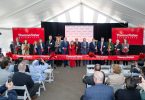

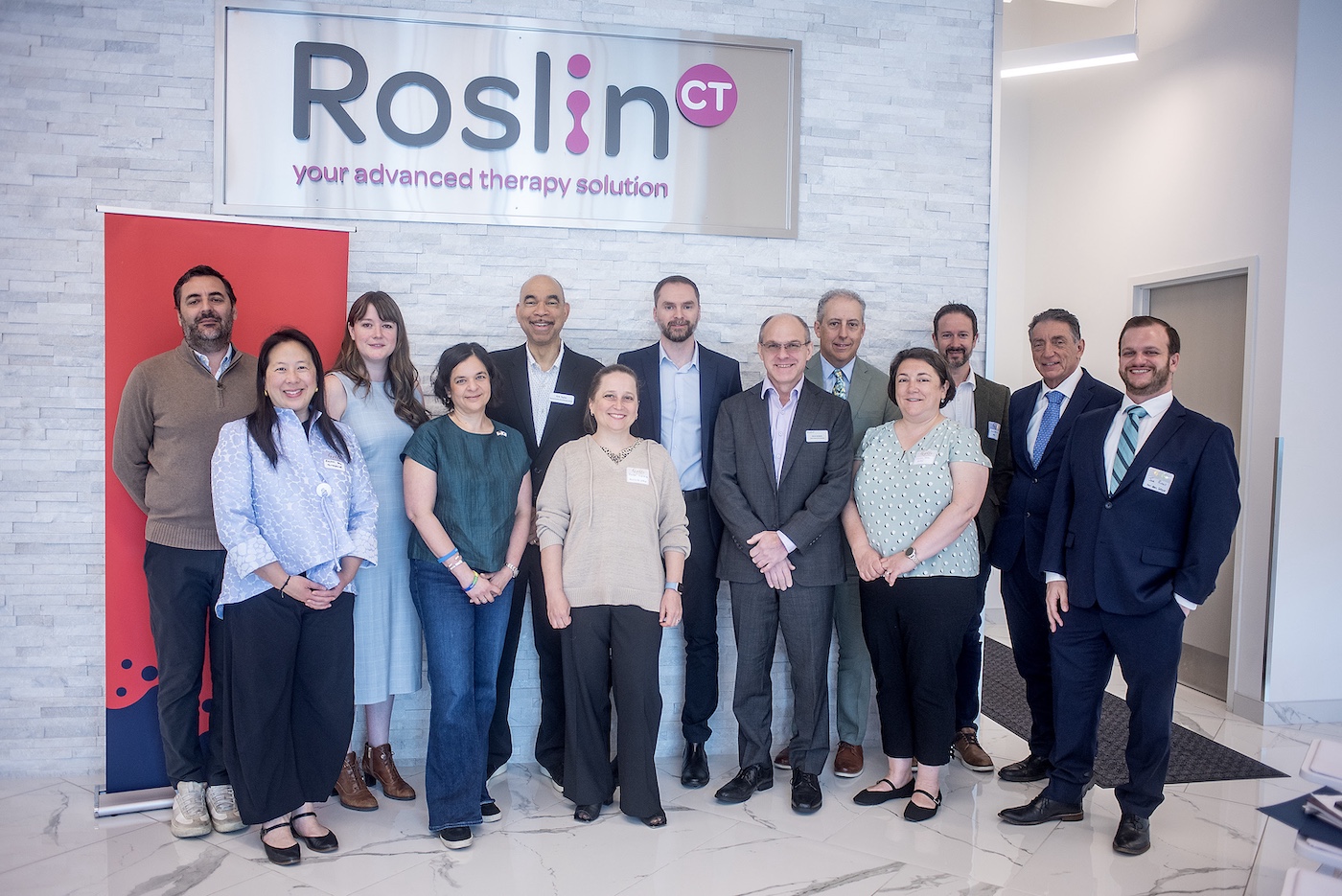
Hopkinton, MA — Economic Development Undersecretary of Business Strategies Zenobia Moochhala and Massachusetts Life Sciences Center (MLSC) president and CEO, Kirk Taylor, MD, recently joined industry and legislative leaders at RoslinCT in Hopkinton to announce five awards through the MLSC’s BioBoost program, which provides funding to expand biomanufacturing and medtech advanced manufacturing operations across Massachusetts.
“Across Massachusetts, we have a thriving life science ecosystem with companies at the forefront of technology and innovation. Sustaining that leadership requires strategic investment in the tools, infrastructure, and talent that fuel long-term growth,” said Governor Maura Healey. “Programs like BioBoost provide the funding companies need to expand their manufacturing capabilities, accelerate commercialization, and cultivate the highly skilled workforce that will power the industry’s future.”
“Massachusetts continues to pair its leadership in the life sciences with sustained investments in development and infrastructure,” said Taylor. “Through programs like BioBoost, we are ensuring companies have access to the resources and talent needed to scale manufacturing operations, reinforcing the Commonwealth’s position as a global hub where innovative treatments and technologies are not only discovered, but also commercialized and produced.”
BioBoost awardees:
Holobiome, Boston – $672,440
Holobiome is working to build a future where the human gut microbiome can be modified to optimize health and cure disease. To do this, they are creating a foundation model to map how human gut bacteria, human biology, and diet interface. Funding will support the company’s growth beyond lab-scale production and create infrastructure for probiotic and postbiotic manufacturing in Massachusetts.
Massachusetts Biomedical Initiatives (MBI), Worcester – $400,000
MBI will work with the Worcester City Campus Corporation (WCCC) to renovate space at the UMass Medicine Science Park to create new mid-size lab and office suites, supporting the retention and growth of life sciences startups in Central Massachusetts.
RoslinCT, Hopkinton – $910,000
RoslinCT, a CDMO in cell therapy manufacturing, will use the funding to expand its Hopkinton facility, adding cleanroom space and equipping the site to support the production of both autologous and allogeneic cell therapy products.
Theromics Inc., West Bridgewater – $100,000
Theromics Inc. is a medtech company developing technologies to improve tumor ablation procedures to remove solid tumors. Funding will support evaluation of a potential manufacturing expansion site working with O’Reilly Strategic Advisors.
Terrestrial (FKA Vaxess Technologies), Woburn – $1,417,560
Terrestrial is developing a novel microarray patch platform for drug delivery, starting with GLP-1s. Funding will support the buildout of the first commercial-scale therapeutic microarray patch manufacturing headquarters in the world.
This first round of BioBoost was highly competitive, with companies requesting approximately $60 million in funding through a program with a $3.5 million budget. Award amounts varied based on the scope of each project, including equipment, facility upgrades, and manufacturing buildout needs. The selected projects were approved by the MLSC board of directors based on their overall strength and potential for impact and success.
—
Through the BioBoost program, the MLSC invests in projects that strengthen in-state manufacturing capacity, accelerate commercialization, and create robust career opportunities for Massachusetts residents—particularly those without a bachelor’s degree. Designed as a flexible and responsive funding tool to meet the evolving needs of the life sciences industry, BioBoost supports manufacturing scale-up and site readiness efforts through capital investments such as facility buildouts, renovations, and equipment. The funding supports projects that deliver targeted public benefits and enable cutting-edge manufacturing to take place closer to vital research and development operations, allowing scaling companies to put down roots in the Commonwealth as they commercialize.